The digital landscape is shifting beneath our feet. While everyone’s been obsessing over SEO, a quiet revolution has been growing that’s changing how people find information online forever.
Remember when searching for information meant typing a query into Google and scrolling through ten blue links? Those days are fading fast. This is the era of Answer Engine Optimization (AEO) where the goal isn’t just to rank, but to BE the answer.
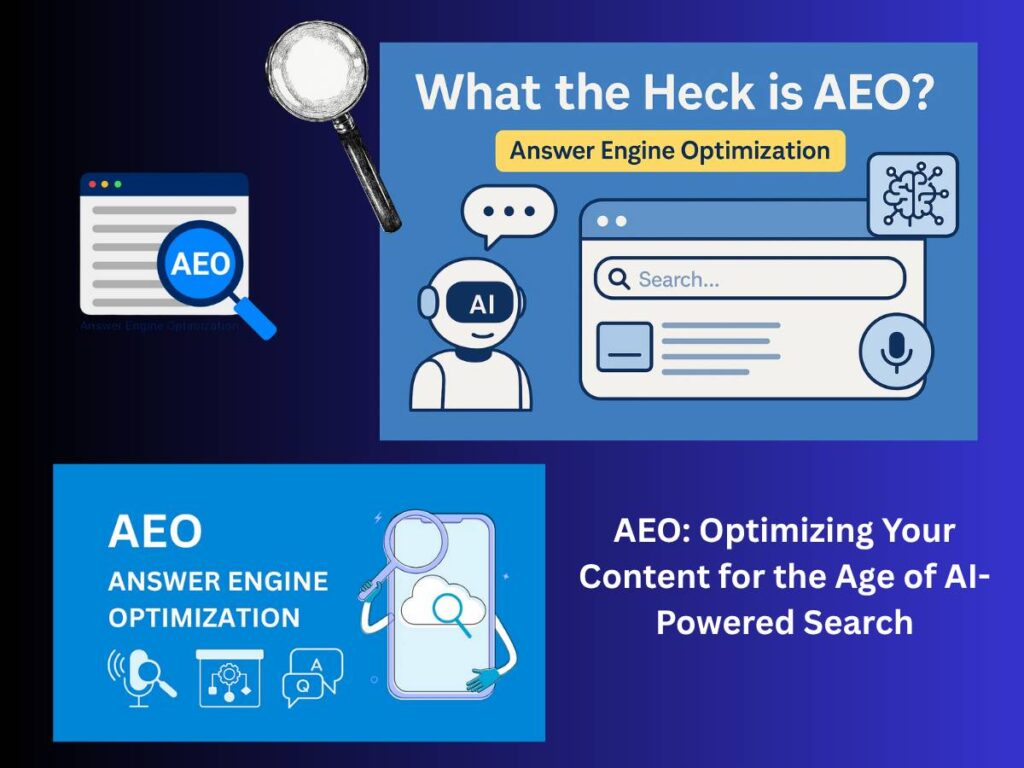
The Search Revolution You Didn’t See Coming
Traditional search engines are evolving into answer engines. ChatGPT, Google’s AI Overviews, Perplexity, and voice assistants like Alexa aren’t sending users to websites; they’re delivering direct answers. This fundamental shift means that appearing in search results is no longer enough. You need to be the source these AI systems cite and trust.
Think about your own behavior. When was the last time you asked ChatGPT a question? Used voice search on your phone? These interactions don’t generate page views or click-throughs, but they’re shaping opinions and driving decisions. If your content isn’t optimized for these platforms, you’re invisible in this new paradigm.
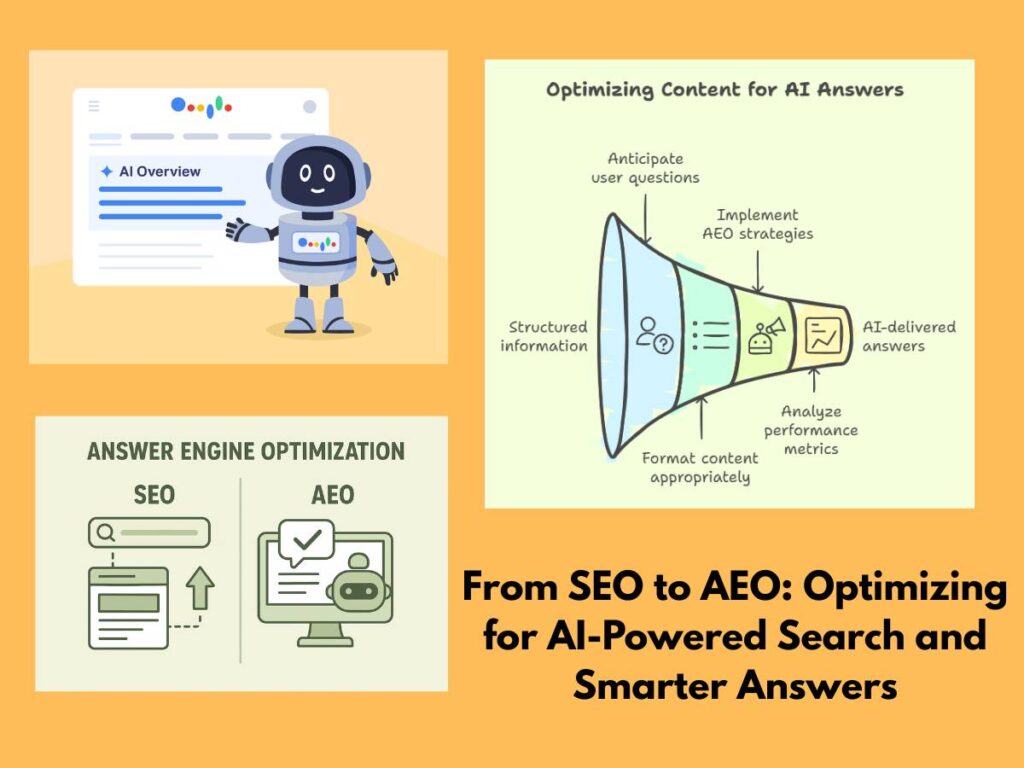
What Makes AEO Different From SEO?
While SEO focuses on ranking for keywords, AEO is about answering questions clearly, comprehensively, and authoritatively. It’s the difference between being found and being featured. Answer engines prioritize content that’s structured for understanding, not just keyword density. They favor natural language, clear formatting, and genuine expertise over gaming algorithms.
Consider this: Google’s featured snippets, People Also Ask boxes, and AI-generated overviews are all manifestations of answer engine behavior. These features often appear above traditional search results, capturing attention before users ever scroll. If you’re not optimized for these, you’re starting the race ten steps behind.
How to Dominate the Answer Engine Era
Focus on question-based content. Create comprehensive resources that directly answer what your audience is asking. Use tools to identify common questions in your niche, then craft detailed, authoritative responses. Structure your content with clear headings that mirror natural language queries.
Embrace structured data and schema markup. Help AI understand your content by implementing proper technical SEO. FAQ schema, How-To schema, and Article markup all signal to answer engines that your content is a reliable source worth citing.
Prioritize expertise and authority. Answer engines favor content from recognized experts. Build your credibility through author bios, citations, and demonstrable expertise. Google’s E-E-A-T principles (Experience, Expertise, Authoritativeness, Trustworthiness) matter more than ever.
Write conversationally. Natural language processing powers modern AI. Your content should sound like a knowledgeable friend explaining a concept, not a keyword-stuffed article. Use clear, concise sentences that directly address user intent.
The Bottom Line: Answer Engine Optimization isn’t replacing SEO—it’s the evolution we’ve been heading toward. The brands that thrive in this post-search world won’t be those with the most backlinks or the highest keyword rankings. They’ll be the ones providing the clearest, most authoritative answers to the questions their audience is asking.
The search landscape has transformed, and the opportunity is massive. While others chase yesterday’s algorithms, forward-thinking marketers are already dominating tomorrow’s answer engines. The question isn’t whether to adapt it’s whether you can afford not to.