You know that feeling when you search for something online and the first result is just… unuseful page after page of keyword-stuffed text that doesn’t really answer your question? That’s exactly what we’re leaving behind. Today’s content strategy asks a different question: “What does the reader actually mean when they search?”
That shift is what I’m calling Semantic SEO 2.0 and yes, it’s a big deal.
What is Semantic SEO 2.0 (and why you really should care)
First off: keywords aren’t dead. But focusing only on them? That’s where things go wrong.
Search-engine behaviour has changed. For example, Google Knowledge Graph now processes more than 800 billion facts about 8 billion entities. Niumatrix Digital In other words, Google is trying to understand concepts and relationships, not just match word strings.
Some top stats:
- 68 % of all online experiences begin with a search engine.
Organic search drives about 53 % of website traffic in some recent studies.
Pages optimized for meaning, intent and topic depth often perform significantly better than ones that just try to hit a keyword over and over.
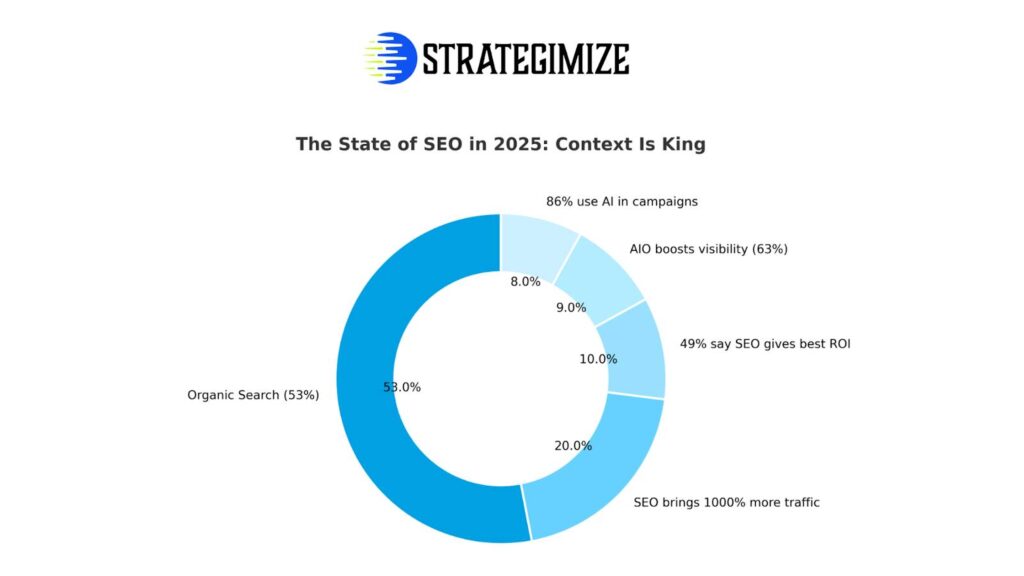
So yes semantic SEO is one of those things you must care about if you want your content to succeed long-term.
Old SEO vs Semantic SEO 2.0
Let’s compare:
| Old SEO | Semantic SEO 2.0 |
| “Target this exact keyword 10 times in my 500-word post” | “Target this topic and the reader’s entire intent behind it” |
| Write for search engines first, humans second | Write for humans first and support machines with structure |
| One page = one keyword | One topic hub + multiple related articles/sub-topics (clusters) |
| Keyword density & stuffing matter | Context, meaning, related terms, topic coverage matter |
| Surface-level content | Deeper content that anticipates follow-up questions, user intent |
For instance: instead of writing a post just for “best running shoes”, semantic SEO would ask: What does “best running shoes” mean for the user? Road vs trail? Pronated vs neutral? Budget vs premium? By covering that full range, you’re answering with intent not just matching words.
What Semantic SEO 2.0 Actually Involves
Here’s a breakdown of how to do it step by step and yes, it does require more thought than just slapping in keywords.
1. Pin down search intent & the full topic
Ask:
- Why is the person searching this? (Informational? Transactional? Navigational?)
- What sub-questions will they have afterward?
- What other related topics are implied?
Example: If someone searches “how to fix posture”, you might cover causes of poor posture, ergonomic tips, exercises, long-term posture habits, professional help, etc.
2. Use topic clusters and related vocabulary
Rather than obsessing over one keyword, build clusters of related terms, synonyms, and adjacent topics.
Search engines now recognise semantic relationships (via NLP, entity-recognition) so your content should reflect that.
3. Write for depth and structure not just length
A long blog isn’t enough if it’s shallow. Depth means:
- covering the main topic thoroughly
- answering follow-up queries
- structuring the content clearly (headings, bullets, visuals)
One case: A site that adopted semantic SEO + structured data saw a 12 % increase in new users and an 18 % jump in organic traffic within 3 months.
4. Link smartly and build topical authority
Create a “pillar” page for your main topic, then link to “spoke” pages covering sub-topics. That internal linking signals to search engines the breadth of your content.
5. Use structured data, entities & markup
Tell search engines what your content is about: product reviews, articles, FAQs, entities (people, places, things). That markup improves the chance to appear in rich results, featured snippets and other enhanced SERP features.
6. Write naturally, clearly, and with value
Keyword stuffing? Out.
Natural language, conversational tone, answering questions? In.
Focus on giving the reader the answer they came for.
Why Doing This Works The Big Wins
Here’s what you get when you shift to a semantic SEO mindset:
- More keyword coverage: Content optimized for meaning often ranks for many more related keywords.
- Better user experience: People find what they need and stay on your page longer.
- Stronger authority: You become the go-to resource in your topic area.
- Future-proofing: With voice search, generative AI, zero-click searches, meaning and context matter more than ever.
As AI becomes smarter and more judgmental about the content it ranks, it’s changing the SEO game completely. AIO Is the New SEO Just Smarter explores how AI interprets content differently and what this means for modern SEO strategies.
Imagine instead of ranking just for “best running shoes”, you rank for “trail running shoes vs road running shoes”, “how often to replace running shoes”, “running shoe pronation stability” you’re covering the topic comprehensively. That’s authority.
What to Avoid Don’t Trip Over These
Avoid:
- Chasing keyword density and stuffing words.
- Publishing thin content that touches on the topic superficially.
- Ignoring linking, internal structure and clusters.
- Forgetting technical SEO basics (site speed, markup, mobile-friendly).
- Publishing once and leaving it topics evolve, content should update.
Wrap Up: A Fresh Mindset for SEO
Semantic SEO 2.0 isn’t just another buzzword. It’s a mindset shift: from “how many times can I use the keyword?” to “how fully can I answer what the user means and wants?”.
When you write with meaning when you map out intent, cover the full topic, structure your content smartly, and support search engines with clarity you stop being just another website. You become the answer people (and algorithms) are looking for.
So: stop stuffing words.
Start crafting meaning.
Want help building a semantic content plan for your niche (keywords, topic clusters, schema markup included)? I can help with that too. How about we map that out now?